Best Online Casinos in Europe: Country by Country Overview
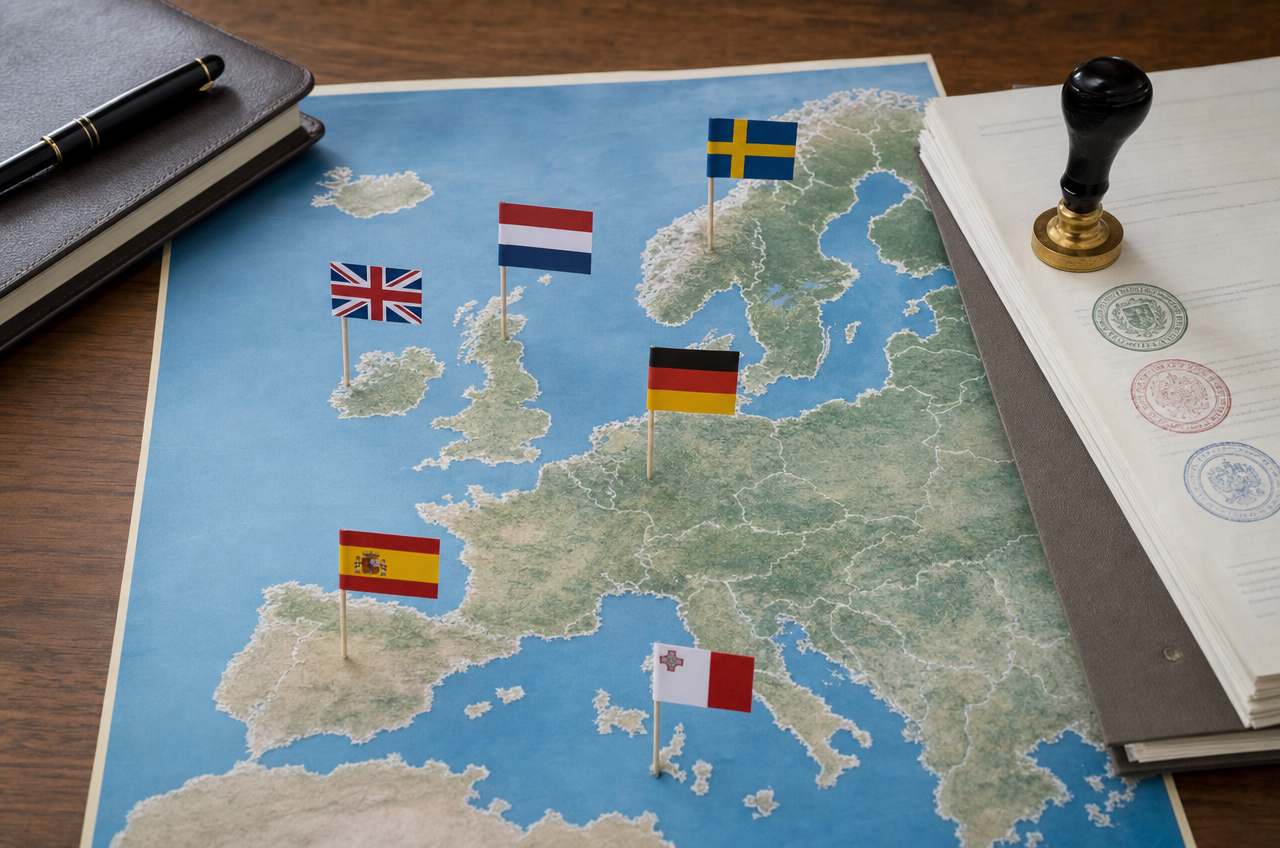
Europe has one of the most developed regulated online casino markets in the world, but it isn’t a single market — it’s a patchwork of national licensing regimes, each with its own rules on what operators can offer, how they must handle player funds, and what restrictions apply to advertising and bonuses. If you’re playing from Europe or interested in how the market works, here’s a country-by-country overview of the main regulated jurisdictions.
United Kingdom
The UK Gambling Commission is widely regarded as running one of the stricter licensing regimes for online casinos. UKGC-licensed operators must segregate player funds, submit to regular audits, comply with strict advertising standards, and offer tools including deposit limits, self-exclusion, and reality checks. The UK market is large and competitive — most major international casino brands hold a UKGC licence. Players can verify any licence at gamblingcommission.gov.uk. Bonus terms have come under increasing regulatory scrutiny in recent years, with a number of operators censured for misleading wagering requirements.
Germany
Germany’s online gambling market went through a long period of legal uncertainty before the Interstate Treaty on Gambling (Glücksspielstaatsvertrag 2021) came into force, creating a federal licensing framework for online slots and poker. The German market is now regulated but notably restrictive by European standards: monthly deposit limits of €1,000 apply by default, stakes on slots are capped at €1 per spin, and autoplay is prohibited. Live casino products remain in a grey area. The regulatory body is the Gemeinsame Glücksspielbehörde der Länder (GGL), based in Halle.
Spain
Spain’s Dirección General de Ordenación del Juego (DGOJ) has issued online casino licences since 2012, making it one of the earlier regulated markets in continental Europe. The Spanish market requires operators to maintain a local .es domain, display responsible gambling warnings prominently, and restrict bonus offers to verified players. Advertising restrictions are among the tightest in Europe following reforms introduced in 2021, with casino advertising largely banned before midnight on broadcast media.
Malta
Malta is notable less as a consumer market and more as a licensing hub. The Malta Gaming Authority (MGA) issues licences that are accepted by players across much of Europe and beyond. Many of the largest online casino brands are MGA-licensed. The island hosts a substantial iGaming industry, with a significant portion of European online casino operations headquartered there. For players, an MGA licence is considered a reliable indicator of operator legitimacy, though following the UK’s post-Brexit changes, MGA-licensed casinos now require a separate UKGC licence to serve UK players.
Sweden
Sweden relicensed its online gambling market in 2019 under Spelinspektionen, ending the previous monopoly model. The Swedish market is now open to licensed operators but comes with notable restrictions: a deposit limit of SEK 5,000 per week applies unless a player actively raises it, and a national self-exclusion register (Spelpaus) allows players to block themselves from all licensed operators simultaneously. Sweden’s approach is often cited as a model for combining market opening with strong consumer protections.
Netherlands
The Netherlands opened its regulated online casino market in October 2021 under the Kansspelautoriteit (KSA). The market was long anticipated — operators had been serving Dutch players in an unlicensed capacity for years — but the eventual regime came with strict advertising rules and a requirement that operators demonstrate efforts to identify and protect problem gamblers. Several major brands initially held back from the Dutch market due to compliance costs before eventually applying for licences.
Other Notable Markets
Denmark (Spillemyndigheden, licensed since 2012), Italy (ADM, one of the larger regulated markets in southern Europe), and Portugal (SRIJ) all operate licensed online casino markets with varying degrees of restriction. Greece, Ireland, and several Eastern European countries have frameworks in various stages of development or reform.
What connects all of these markets is the general direction of travel: tighter advertising rules, deposit limit requirements, and stricter verification of player identity and age. The era of loosely regulated European online gambling is broadly over; the question for operators is compliance cost, and for players, it’s which jurisdictions offer the combination of game choice and consumer protection they’re looking for.
For a look at the best cities for land-based casino visits across Europe, see our guide to the top gambling destinations in Europe.