
Gambling Capital of Europe: Where Is It?
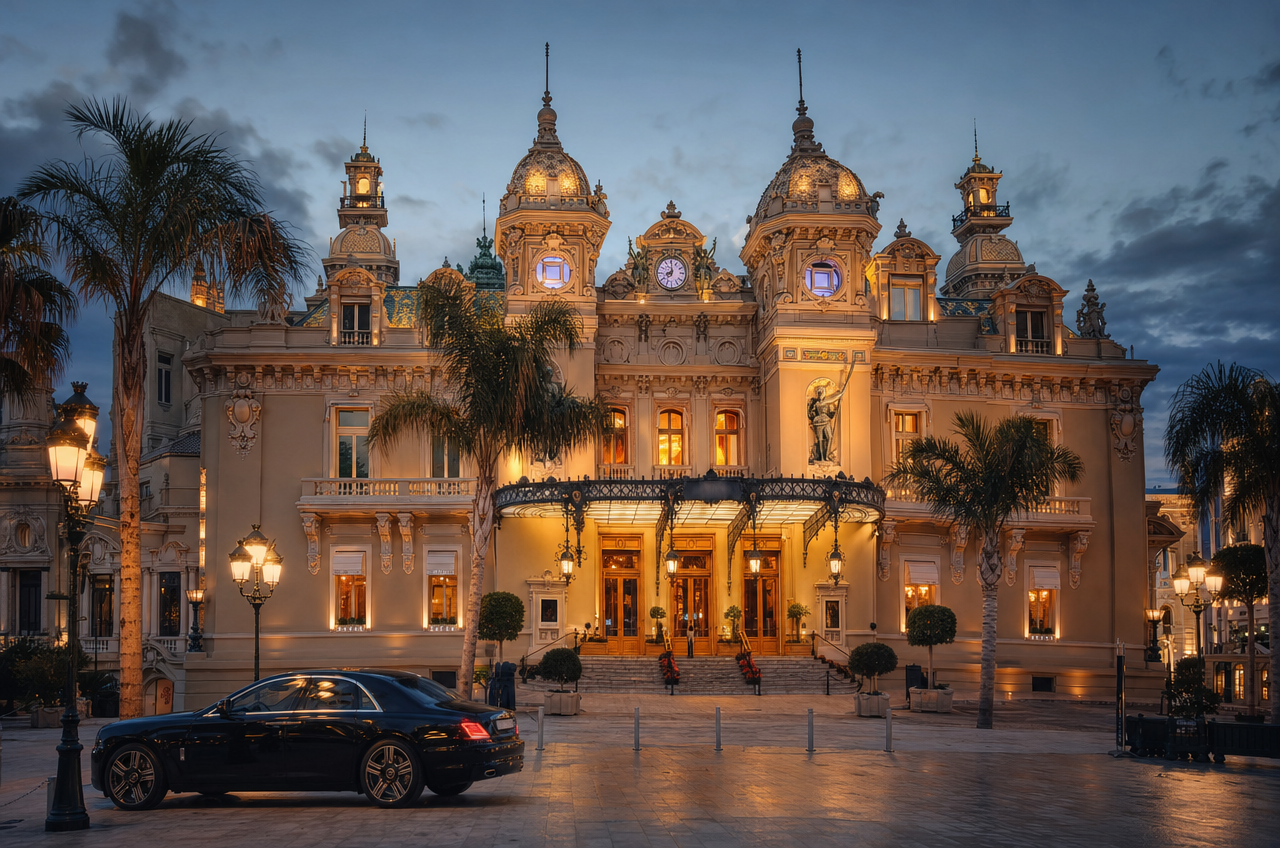
Ask a dozen people which city deserves the title of gambling capital of Europe and you’ll get half a dozen different answers, each reasonable. The honest answer is that it depends entirely on what you mean by the title — biggest land-based casino industry, most famous gambling address, highest concentration of poker tournaments, or the city most associated with gambling in the popular imagination. Each of those measures points somewhere different.
Monte Carlo: The One Everyone Thinks Of First
If the question is purely about reputation, Monte Carlo wins without much argument. The Casino de Monte Carlo has been operating since 1863, and the name has become so associated with high-stakes gambling that it’s used as shorthand for the concept in other contexts — Monte Carlo simulations in mathematics, Monte Carlo methods in statistics. The principality of Monaco built much of its modern identity around the casino, and the image of tuxedoed high-rollers at the baccarat tables is still what most people picture when they think of European gambling.
In practical terms, Monte Carlo is a small operation by modern standards. Four casinos, a relatively modest number of tables, and a location that makes it inaccessible to most casual visitors. The reputation far exceeds the scale.
London: The Largest Regulated Market
By the measure of licensed casino capacity, London makes a strong case. The city has over two dozen licensed casinos, including some of the most famous establishments in the world — the Hippodrome, the Ritz Club, and the Grosvenor Victoria among them. The UK’s regulatory framework is among the most developed in Europe, and London hosts major international poker series including legs of the World Series of Poker and the PokerStars Championship. The sheer volume of players, the quality of the licensed operators, and the depth of the market make London arguably the most significant gambling city in Europe by most practical measures.
Prague: Europe’s Poker Hub
Prague has built a specific reputation as the continent’s poker destination. The city hosts more than 25 land-based casinos with over 20 dedicated live poker tables, and it regularly features on the World Series of Poker Europe circuit. The combination of lower costs compared to Western European capitals, a central location, and a concentration of serious poker venues has made Prague the go-to destination for poker tourists in a way that no other European city outside London quite matches. Banco Casino and Rebuy Stars Casino Savarin are among the best-known stops on the European poker circuit.
Malta: The iGaming Capital
Malta’s claim to the title is of a different kind. The island is not primarily a land-based gambling destination but it is, without question, the administrative and corporate centre of the European online casino industry. The Malta Gaming Authority is the most widely cited licensing body for online casino operators serving European players, and a large proportion of the major brands in the industry are headquartered on the island. If the question is which location sits at the centre of European gambling as a business, Malta is the answer.
Vienna: Historic Rooms, Serious Play
Vienna’s Casino Wien is one of the oldest and most elegant casino venues in Europe, and the city has twelve operational brick-and-mortar casinos. Austria’s gambling market is state-controlled through Casinos Austria, which operates the licensed venues. The Concord Card Club was once home to what was claimed to be the largest poker room in Europe. Vienna’s gambling scene tends towards the traditional and serious rather than the tourist-facing spectacle of Monte Carlo.
So Which One Is It?
There’s no single correct answer, which is part of what makes the question interesting. Monte Carlo has the name. London has the scale and regulation. Prague has the poker. Malta has the industry. Vienna has the history. The title shifts depending on the criteria, and any of the five could make a credible argument.
If you’re planning a trip based on the gambling rather than the city, the decision comes down to what you’re actually looking for: the prestige and theatre of Monte Carlo, the depth and variety of London, or the pure poker focus of Prague. All three are worth the visit for different reasons.
For a full rundown of gambling destinations across the continent including these and others, see our guide to the best gambling cities in Europe.
 Being a European gambler is both a blessing and a curse, I assure you! It’s a blessing because gambling is completely legal in most EU countries – you can go to UK, Spain, France, Germany, wherever you want, and then you can walk into a casino and spend a good couple of hours enjoying yourself. You can’t really do that in America or Asia, where gambling is only legal in certain places, which, trust me, are very few and far in between. But it’s also a curse because European gambling kind of lacks individuality. Sure, we’ve got the standard games – roulette, slots, blackjack and all that jazz, but we don’t really have anything that’s distinct and unique, that makes European gambling different from its foreign counterparts. I propose that we make gambling more uniform by bringing some foreign games to Europe! At first you may not agree with my ideas, but just wait until you know exactly what we’re missing!
 Air hostess Melissa Curry and flight attendant Matt Dockray made a bet with their life and their love and it paid off in full. Melissa had been seeing Matt for only a couple of months, when she decided to place a bet on him putting a ring on it, so to speak. Her desire was to give her new boyfriend a special Valentine’s gift, back in 2006 so she went on to ask bookmaker William Hill for odds on their future wedding.
 Martingale is hand-down the most commonly used roulette strategy both at land-based and at online casinos. Funny thing about it is that in theory it’s infallible while in practice it’s disastrous for the player. Let’s find out why.
 When you sign up in an online casino, no matter which country you’re from, chances are you’re going to be bombarded with suggestions for games you could play. Most online casinos have between 50 and 300 games ready to go, and a good chunk of them are presented to you right there on the front page with no context at all, you’re just left to fend for yourself and figure things out on your own. And in an environment where literally every single time you play you have to pay real money, there’s really not a whole lot of room for testing stuff out and figuring everything all on your own. Sure, some online casinos offer a free play option where you can test the games without paying, but it’s not available everywhere and, when it is, it’s often limited to only certain games. So if you can’t figure things out on your own, what are you supposed to do?
  Oh, how the tide changes! Regarded as nothing but a fad that would be completely gone before the end of the last decade, online casinos have gown tremendously over the years to the point where they made a mind-blowing $41 billion this year alone, making it one of the most successful online-only markets… ever, really. Definitely not bad for something that a lot of people seemed to write off as obsolete, huh? While not really all that popular in the US, online gambling (and online casino in general) has made a tremendous impact in Europe. While UK, Spain and Germany are the biggest online casino markets by a huge margin, almost every EU country where gambling is legal has its own online casinos, including, but not limited to, the Netherlands, Greece, Bulgaria, Portugal and many, many, many more!